Social Items

Showing posts with label Poetry. Show all posts

You’re wondering if I’m lonely:
OK then, yes, I’m lonely
as a plane rides lonely and level
on its radio beam, aiming
across the Rockies*
for the blue-strung aisles
of an airfield on the ocean

You want to ask, am I lonely?
Well, of course, lonely
as a woman driving across country
day after day, leaving behind
mile after mile
little towns she might have stopped
and lived and died in, lonely


If I’m lonely
it must be the loneliness
of waking first, of breathing
dawn’s first cold breath on the city
of being the one awake
in a house wrapped in sleep

If I’m lonely
it’s with the rowboat ice-fast on the shore
in the last red light of the year
that knows what it is, that knows it’s neither
ice nor mud nor winter light
but wood, with a gift for burning
*Rockies: a mountain range in the USA

--- two paragraphs of analysis ---

An idea that is strikingly communicated through the poem is confidence. This is presented by the first-person point of view used throughout the poem: “Ok then, yes, I’m lonely.”, and “If I’m lonely”. There are no descriptions of other characters except scenes metaphorically explaining the poet’s believes and values. This shows that the poet is willing to let the audience to look into her heart directly, completely deep into her thoughts and feelings. It highlights that the poet has no fear in clarifying her ideas and challenging the audience’s usual understanding of the word “lonely”, exploring the idea of self-confidence.

The poet strikingly conveyed her feeling that she will always live in a free lifestyle. The title of the poem, “Song”, could have many meanings. A song could be exciting and inspiring, or sad and bitter. It could be a solo sung by the poet herself, or a hymn sang by a choir. The variety of its explanation suggests the manifold possibility of the poet’s life. The same idea was expressed by lines in each stanza. ”You’re wondering if I’m lonely: / OK then, yes, I’m lonely / as a plane rides lonely and level” Unlike classical poems, Song does not have a clear meter or rhyme scheme, the poet herself decides where and how to stop the line. This could imply that the writer wants to live in the way she decides, no matter how other people might think about her, what their views and opinions might be.
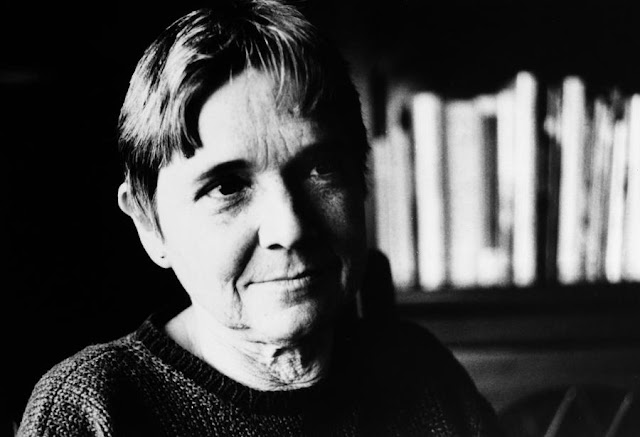
Song by Adrienne Rich Analysis

Blessing is a poem written by Imtiaz Dharker in 1989 from a typical Mumbai slum scene. War Photographer is written by Carol Anne Duffy in 1985, inspired by her photographer friend who recently returned from a war-torn foreign country. The two poems use techniques that are sometimes similar and sometimes widely different. Overall, the images were portrayed in order to support themes in the poems, lack of water and war in Blessing and War Photographer respectively.

In Blessing and War Photographer, the writers have presented powerful images with poems of different structure. In Blessing, the writer uses free verse to imitate the water. For example, “A congregation: every man woman / Child for streets around”, and “Their highlights polished to perfection, / flashing light”. There are long lines followed by short lines and vice versa, powerfully presenting the free-flowing nature of water, underscoring its preciousness to people in the poem. On the other hand, in War Photographer, we have fixed and rigid sestets with a strict and recurrent rhyme scheme, for example, “alone”, “rows”, “glows”, “he”, “mass”, “grass”, to represent the order orchestrated by the protagonist of the poem, showing him as a holy figure bringing salvation to human kinds in order to highlight the brutality of war through his perspective. Therefore, the two writers differ on the way they structure the poem when presenting powerful images to portray the important elements in their poems.

Photo by Atharva Tulsi on Unsplash

The two writers also use different ways to describe an urgent situation. In War Photographer, the writer uses juxtaposition when demonstrating the way the photographer asked for permission: "he sought approval without words”. Permission has to be “sought" by communication in some sort of language, while the photographer sought permission “without words”. This could be that the photographer could not stand the brutality of the war anymore, and strongly wanted to show it to the rest of the world and urgently wished to provide a way to ease the effect of wars. The urge here is shown thoroughly through the use of juxtaposition. Contrarily, the sense of urgency is presented through enjambment in Blessing. By abruptly ending the last line, the readers have to hurry to the next line to make sense of the sentence, increasing their reading speed. The sentences flow smoothly from one to the other without stopping, possibly imitating how the villagers in the poem rush to get water urgently relentlessly. Duffy uses the juxtaposition to show the urgency in War Photographer, suggesting the responsibility of the photographer. This is in contrast to Dharker, who demonstrates the imperativeness of the villagers to get water, implying the preciousness of water. Thus, the two writers use disparate ways to describe an urgent situation.

On the other hand, the two writers also present powerful images in some similar ways. The same perspective is used in both Blessing and War Photographer. Blessing narrates the whole story through with a third-person point of view: “every man woman child for streets around”. This allows readers to see the reactions of lots of characters, thus suggests their harsh situation in the slums. War Photographer also describes things from a third-person point of view: “he remembers the cries of this man’s wife”. This explains what the War Photographer had seen in the places torn by war. By using this perspective, image is powerfully presented, readers are given a full understanding of the settings, the characters, and the situations, thus having a better comprehension of the photos the photographer took.

Photo by Duncan Kidd on Unsplash

There is also similarities between how the two writers use metaphors. Metaphors in both poems reflect the main themes by representing them with other things with the same characteristics. For instance, in Blessing, the water drops are described as “silver crashes to the ground”. Silver here connotes the valuableness of water, thus signifies people hardship in the place described in the poem. Similarly, in War Photographer, the man in the photographer’s image is said to be “a half-formed ghost”. The word “ghost” comprehensively expresses the languishment and paleness of the man in the war-torn country, hence indicates the irreversible and severe impacts of war. Thence, both the two writers use metaphors to reflect the themes of their poems.

As a conclusion, writers of Blessing and War Photographer used similar and different techniques in portraying images. While Blessing describes in a free a flowing way and is smartly using punctuation, War Photographer is fixed, rigid and contains a lot of language techniques. These contribute to the themes of lack of water and war in both poems.

Comparing Blessing and War Photographer

by Carol Anne Duffy

In his dark room he is finally alone
with spools of suffering set out in ordered rows.
The only light is red and softly glows,
as though this were a church and he
a priest preparing to intone a Mass.
Belfast. Beirut. Phnom Penh. All flesh is grass.

He has a job to do. Solutions slop in trays
beneath his hands, which did not tremble then
though seem to now. Rural England. Home again
to ordinary pain which simple weather can dispel,
to fields which don’t explode beneath the feet
of running children in a nightmare heat.

Something is happening. A stranger’s features
faintly start to twist before his eyes,
a half-formed ghost. He remembers the cries
of this man’s wife, how he sought approval
without words to do what someone must
and how the blood stained into foreign dust.

A hundred agonies in black and white
from which his editor will pick out five or six
for Sunday’s supplement. The reader’s eyeballs prick
with tears between the bath and pre-lunch beers.
From the aeroplane he stares impassively at where
he earns his living and they do not care.

-- Analysis --

In War Photographer by Carol Anne Duffy, the poet portrays the contrast between England and places with wars, the photographer’s impression of war and the urge of the photographer trying to show the scenes with the world.

Firstly, the poet portrays the darkroom with a sense of regularity to contrast with places with wars. This is reflected in the use of form where the poet has chosen to use 4 regular sestets, showing the sense of regularity. Furthermore, the rhyme scheme remains the same as “abbcdd”, for example, “alone, rows, glows, he, mass, grass”, throughout all the 4 stanzas. The stanzas and the consistent rhyme scheme underpin the regularity of the darkroom. The environment in Rural England is a distinct contrast to the chaos and disorder in the places torn apart by war.

Secondly, the poet implies that the war has left strong impressions in the war photographer’s heart. This is shown through the use of a double entendre: “A stranger’s features faintly start to twist before his eyes”. From the setting of the story, this is a description of the process of an image showing when it is being soaked in solutions. However, another explanation for the description is that the photographer started to slowly recall what he has seen when taking the photo and dangerousness of war. In addition, the poet wrote that the photographer “did not tremble” in the places with wars going on “then though seem to now”. Cases like this are usually due to extreme fear that human brains are unable to react to. This further implies the brutality of war.

Thirdly, the poet demonstrates the impendency and the urge of the photographer. This is indicated by the way the photographer seeks for permission in Stanza Three. “he sought approval without words”. The photographer did not even talk to the man or his wife before taking the photo. This could be that he could not stand the brutality of the war anymore, and strongly wanted to show it to the rest of the world, urgently wished to provide a way to ease the effect of wars. Additionally, the word “must” is emphasized in line 5 of the same stanza as it is the last word in the line. It stresses the importance of taking these photos, demonstrating the impendency of the photographer, indirectly showing the brutality of war.

In War Photographer by Carol Anne Duffy, the poet portrays the contrast between England and places with wars, the photographer’s impression of war and the urge of the photographer trying to show the scenes with the world. Thus, the poet portrays the brutality of war to a large extent.

War Photographer

To see the poem on the original website

The gates are chained, the barbed-wire fencing stands,
An iron authority against the snow,
And this grey monument to common sense
Resists the weather. Fears of idle hands,
Of protest, men in league, and of the slow
Corrosion of their minds, still charge this fence.

Beyond, through broken windows one can see
Where the great presses paused between their strokes
And thus remain, in air suspended, caught
In the sure margin of eternity.
The cast-iron wheels have stopped; one counts the spokes
Which movement blurred, the struts inertia fought,

And estimates the loss of human power,
Experienced and slow, the loss of years,
The gradual decay of dignity.
Men lived within these foundries, hour by hour;
Nothing they forged outlived the rusted gears
Which might have served to grind their eulogy.

·· Analysis ··

In An Abandoned Factory by Philip Levine, the poet strikingly portrays the factory with a sense of permanence and order, oppressiveness, inactivity, and excruciations. These are shown in the use of form, symbolism, continuous verbs, and precise dictions.

The poet portrays the factory with a sense of permanence and order. This is reflected in the use of form where the author has chosen to use three regular sestets mirroring the sense of order. Furthermore, the use of iambic pentameter creates a regularity to the pace of the poem and this is perhaps symbolic of the factory's machines which too would have had a regularity in pace. In addition to this, the regular rhyme scheme further underpins this sense of continuity as it maintains a stable and symmetrical tone to the poem.

The poet manifests the oppressiveness of the factory. This is shown through the use of symbolism in the first stanza. In the first sentence, the factory is described as “chained” with “barb-wire fencing”, which sounds a lot like a prison. The pillars in front of the gate is an “iron authority” that “resists the weather”, just as guards of a prison that oversee everything. This symbolizes how the workers in the factory were being imprisoned intellectually, being drained from the continuous hard work. Moreover, the poet describes the fence as being charged by “the corrosion of their minds”. This refers to the loss of hope of the workers working in the factory, implying that their hopelessness fuels them to continue working. These symbols vividly show the situation of the workers that used to work in the factory and the oppressiveness of the factory.

The poet portrays the factory with inactivity. This is presented through the continuous use of verbs, as the poet walks into the inside of the factory. While describing the presses inside the factory, verbs like “paused”, “suspended”, “remain” are used, “stopped” and “blurred” are also used to illustrate the old iron wheels. This reflected that the factory was unchanged for a long time. Furthermore, the frequent uses of these verbs give a slow rhythm, often stopping readers, thus creating the atmosphere of inactivity in the abandoned factory.

The factory is also shown as an excruciating place. The dictions used in the last stanza reflect this. What happened before in the factory is described as the “gradual decay of dignity”, and the workers spent their life in the factory, being tormented as they counted “hour by hour”. Moreover, the word “eulogy” is used at the end of the poem, suggesting that the machines in the factory have spent so long time with the workers, knowing them so well. It also implies that the workers were killed slowly by the factory, the painful ordeals, signifying the factory as an excruciating place.

As a conclusion, the poet portrays the factory with a sense of permanence and order, oppressiveness, inactivity, and excruciations. These are shown in the use of form, symbolism, continuous verbs, and precise dictions.

An Abandoned Factory, Detroit